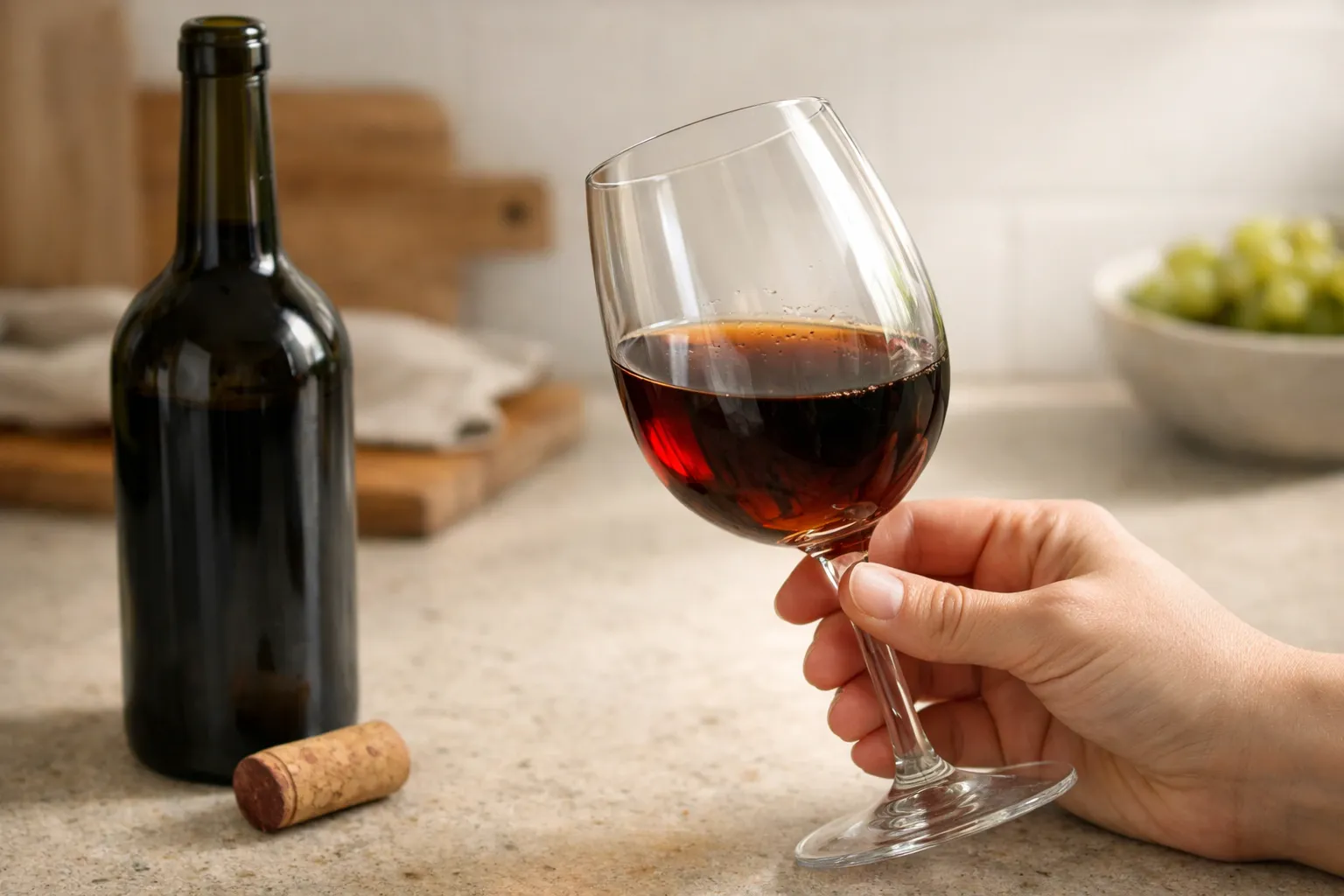
How Do I Know If Wine Has Gone Bad? Fast Beginner Check

| TL;DR |
| You will usually know wine has gone bad if it smells like vinegar, wet cardboard, or nail polish remover, looks unusually brown or cloudy, or tastes flat and sharp. That quick check matters because wine consumption still reached 214.2 million hectolitres worldwide in 2024, so wasting a good bottle adds up fast. |
| Key Takeaways |
| Wine is usually “bad” because it is oxidized, corked, heat-damaged, or well past its best. |
| The fastest clues are color change, sour smell, flat taste, seepage, or fizz in a still wine. |
| Vinegar, wet cardboard, and nail polish remover are red-flag aromas. |
| Most spoiled wine is a quality problem first, not a dramatic safety event. |
| Sparkling wine fades fastest after opening, while fortified wine lasts the longest. |
| Dull wine can still work in cooking, but moldy, fizzy, or sharply chemical wine should go down the drain. |
You know wine has gone bad when it smells sour or chemical, looks oddly brown or cloudy, or tastes flat and harsh instead of fresh and balanced. Not every disappointing bottle is ruined, though. Some wines are oxidized after opening, some are flawed from the start, and some are simply old. This guide helps you tell the difference and decide whether to drink it, cook with it, or dump it. Wine is worth checking before tossing: U.S. consumption still hit 870 million gallons in 2024 (Source: Wine Institute, 2025).
Table of Contents
How do I know if wine has gone bad after opening?
The fastest check is simple: look at the color, smell the wine, then take one small sip. If the wine smells sour, stale, or chemical, and the taste is flat or harsh, the bottle is usually past its best. That is worth learning because global wine consumption still reached 214.2 million hectolitres in 2024 (Source: OIV, 2025).
What are the signs that wine has gone bad?
Start with a 60-second check:
| Sign | What it usually means | What to do |
| Brown or orange color in a young white | Oxidation or heat exposure | Smell and taste |
| Bricky, dull color in a young red | Oxidation | Usually dump |
| Vinegar or nail polish smell | Acetic spoilage / severe oxidation | Dump |
| Wet cardboard or musty smell | Cork taint | Dump |
| Fizzy still wine | Re-fermentation or spoilage | Dump |
| Flat taste with no fruit | Past peak or oxidized | Cook or dump |
Young white wines should look bright, not muddy gold. Young reds should still show life, not a tired brown edge. A still wine should never surprise you with bubbles unless it is meant to sparkle. Pro tip: If the smell is clearly vinegar-like before you sip, trust your nose. You do not need a second opinion from your palate.
If words like oxidized, corked, and tannic still blur together, read Wine Terminology Every Beginner Should Know first, so the sensory clues make more sense.
Can you tell if unopened wine has gone bad before you pull the cork?
Yes. Before opening, check the fill level, cork position, leakage, and whether the wine looks strangely hazy. Bottle condition matters because wine production fell to 225.8 million hectolitres in 2024, the lowest level in more than 60 years, so it pays to avoid dumping a sound bottle (Source: OIV, 2025).
How can you tell if unopened wine has gone bad?
Pushed cork: heat can expand the liquid and nudge the cork upward.
Sticky neck or seepage: wine leaking around the closure often points to heat damage or seal failure.
Very low fill level: more air inside means more oxidation risk, especially in older bottles.
Cloudiness in a still wine: some natural sediment is fine, but random haze in a basic young wine can be a bad sign.
Fizz in a still bottle: unexpected bubbles suggest re-fermentation or spoilage.
A dusty bottle is not a problem. A wet capsule is. That is the difference beginners often miss. Common mistake: judging unopened wine by age alone. Storage and bottle condition tell you much more than the number on the shelf.
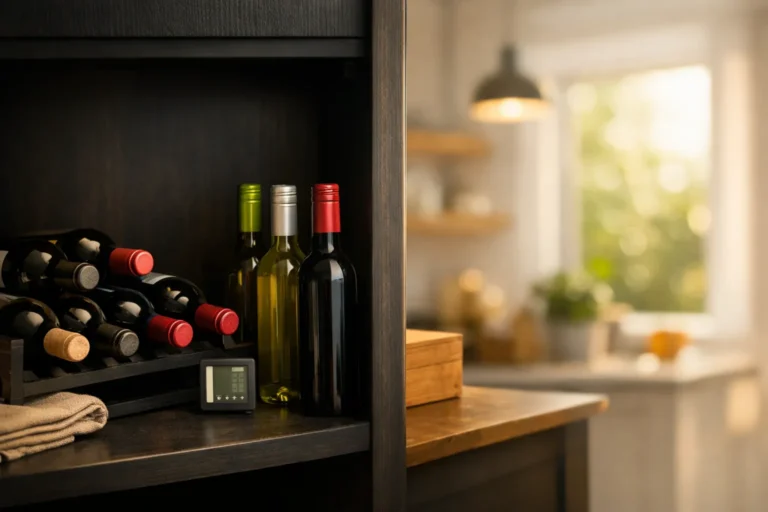
If you want to avoid these problems in the first place, see How to Store Wine at Home Without a Cellar for the simple storage rules that keep everyday bottles sound.
What does bad wine smell and taste like?
Bad wine usually smells like vinegar, nail polish remover, wet cardboard, mold, or bruised apples. On the palate, it loses fruit, feels flat, and turns sour or oddly sharp. The Wine & Spirit Education Trust notes that corked wine often smells musty or like damp cardboard, which is one of the easiest faults for beginners to learn (Source: WSET, 2023).
What does bad wine smell like?
Vinegar: the wine has moved too far toward acetic spoilage.
Nail polish remover: harsh volatile notes from oxidation and bacterial activity.
Wet cardboard or damp basement: classic cork taint.
Cooked fruit in a fresh table wine: oxidation or heat damage.
No aroma at all: sometimes the wine is simply dead and flat.
Taste matters, but smell gets you there faster. A nutty note can be normal in Sherry. The same note in a fresh Sauvignon Blanc is a warning. A Pinot Noir can soften after a day open. It should not smell like salad vinegar by day four.
For a simple tasting refresher, see How to Taste Wine Like a Pro after this guide.
Can spoiled wine make you sick or just taste bad?
Spoiled wine is usually a quality problem before it is a safety drama. Most bottles that have gone off taste unpleasant well before they become a true food-safety concern. This is also a good place to stay grounded about alcohol: WHO Europe reported in 2025 that only 15% of people knew alcohol causes breast cancer, and 39% knew its link to colon cancer (Source: WHO Europe, 202).
Can spoiled wine make you sick?
Usually, no. Most “bad wine” is simply oxidized, tired, or faulty, which makes it unpleasant rather than hazardous. The exceptions are bottles with visible contamination, broken seals, obvious spoilage, or conditions that make you doubt the bottle’s integrity. When in doubt, do not talk yourself into finishing it.
| If the wine is… | Best call |
| Slightly dull but not nasty | Drink soon or cook with it |
| Sour, vinegary, chemical, or musty | Dump it |
| Moldy, leaking, or fizzy when still | Dump it |
| Merely older and softer | Taste first, then decide |
If bad wine and bad reactions are getting mixed in your head, read What Causes Wine Headaches? It’s Probably Not Sulfites for the difference between spoilage, sensitivity, and dehydration.
Why does wine go bad after opening, and how long does it last?
Wine goes bad after opening because oxygen starts changing it right away. Refrigeration slows that process, but it does not stop it. U.S. wine consumption totaled 870 million gallons in 2024, so opened-bottle waste is a normal household problem, not a collector-only issue (Source: Wine Institute, 2025).
How long does opened wine last?
| Wine type | Typical quality window after opening | What usually goes first |
| Sparkling wine | 1–2 days | Bubbles and freshness |
| Light white or rosé | 2–4 days | Aroma and crispness |
| Fuller white | 3–5 days | Fruit detail and texture |
| Light red | 2–3 days | Fruit and lift |
| Fuller red | 3–5 days | Balance and finish |
| Fortified wine | Weeks to months | Freshness, more slowly |
These are quality windows, not expiration laws. A bold Cabernet Sauvignon may outlast a delicate Pinot Noir. A Port will outlast both. Personal experience: when I re-tasted an opened Sauvignon Blanc and Pinot Noir side by side on day four, the Sauvignon Blanc had a sharp vinegary edge, while the Pinot had mainly gone dull and tired before it smelled truly bad.
For a full storage timeline by wine style, see How Long Does Opened Wine Last in the Fridge?.
What should you do with wine that is almost gone?
If the wine is dull but not disgusting, cooking is usually the smartest move. If it is sharply vinegary, moldy, musty, or chemical, dump it. That middle zone matters because California wine sold in the U.S. reached an estimated retail value of $67.5 billion in 2024, so saving a bottle that is still usable is not trivial (Source: Wine Institute, 2025).
Can you cook with wine that has started to turn?
Yes, if it has simply lost brightness and still smells basically clean. No, if it smells like vinegar, nail polish remover, wet cardboard, or rot. Cooking can rescue tired wine, but it does not fix spoiled wine.
Good uses for nearly-gone wine: pan sauces, braises, mushroom dishes, tomato sauce, and risotto.
Bad uses for spoiled wine: delicate sauces, salad dressing made with harsh wine, or any dish where the wine flavor stays front and center.
Frequently Asked Questions
Can spoiled wine make you sick?
Usually, no. Spoiled wine is more often unpleasant than dangerous because alcohol and acidity make it less like spoiled food. Still, visible mold, contamination, broken seals, or weird fizz in a still wine are good reasons to dump it instead of testing your luck.
Is it safe to drink old wine?
Yes, if “old” means aged but still sounds. Age alone does not ruin wine. The better test is fill level, seepage, smell, color, and taste. A properly stored old bottle can be fine, while a badly stored younger bottle can be dead or faulty.
Can you drink wine 2 years out of date?
Yes, sometimes. Most table wines do not have a strict expiration date, so the answer depends on style and storage. If the bottle shows leakage, a pushed cork, haze, sour smell, or a flat, tart flavor, skip it. If it smells and tastes normal, it may still be fine.
What does bad wine smell like?
Bad wine usually smells like vinegar, nail polish remover, wet cardboard, mold, or bruised apples. Fresh wine should smell alive and balanced, not aggressive and sour. If the aroma makes you recoil, the wine is already telling you the answer.
How can you tell if unopened wine has gone bad?
Check the bottle before the cork. Seepage, a pushed cork, very low fill, odd haze, or bubbles in a still wine are the main warnings. Those signs suggest heat damage, closure failure, or oxidation before the wine ever reaches your glass.
How long does opened wine last?
Most opened still wines taste best for about three to five days when re-corked and refrigerated. Sparkling wine often drops off after one to two days, while fortified wines can last much longer. The real test is still your nose and palate, not the calendar alone.
The final check: drink, cook, or dump?
• Drink it if the wine still smells clean, tastes balanced, and only seems a little softer than before.
• Cook with it if it is dull but not nasty.
• Dump it if it smells like vinegar, nail polish remover, wet cardboard, mold, or anything rotten.
Never drink spoiled wine again—learn the signs now! If you want the next practical step, read How Long Does Opened Wine Last in the Fridge so you know how long each wine style usually stays worth drinking.
| Author bio |
| Muhammad Ahsan is the wine blogger behind WizePulse, where he helps USA beginners understand wine with confidence through clear guides, honest reviews, and practical food-pairing advice. |