Wine Terminology Every Beginner Should Know: 21 Essential Terms

If wine terminology every beginner should know sounds like the cheat sheet you wish someone had handed you in the wine aisle, this is it. You do not need sommelier-level vocabulary to enjoy wine. You only need a small set of useful words that help you read labels, describe what you like, and stop mixing up terms like dry, fruity, and full-bodied. Once those basics click, shopping, ordering, and talking about wine all get much easier.
WSET wine tasting framework.
Key Takeaways
| • Start with terms that describe sweetness, weight, structure, and origin. |
| • Dry means not sweet, while tannin is the drying, gripping sensation many reds have. |
| • Body describes mouthfeel, not quality. |
| • Vintage is the harvest year, and AVA is a U.S. term for a defined wine-growing region. |
Table of Contents
The 10 wine terms beginners should learn first (Wine Terminology Every Beginner Should Know)
The fastest way to learn wine language is to start with the terms you will actually use: sweetness, body, acidity, tannin, finish, varietal, and vintage. These words show up in tasting notes, on labels, and in conversations with wine shop staff, so they are more useful than a giant A-to-Z glossary.
Think of them in layers. Sweetness tells you how sugary the wine tastes. Your body tells you how heavy it feels. Acidity tells you how fresh or zippy it feels. Tannin tells you how drying it feels. Finish tells you what stays with you after the sip. That framework gives beginners a practical way to describe a wine without guessing.
| Term | Plain-English meaning | Where you’ll hear it | Beginner example |
| Dry | Not sweet | Menus, shop talk, tasting notes | I want a dry white, not something sugary. |
| Off-dry | Slightly sweet | Riesling descriptions | This has a touch of sweetness. |
| Body | Weight in the mouth | Bottle reviews and wine lists | This red feels full-bodied. |
| Acidity | Bright, mouthwatering freshness | White wine and pairing notes | This Sauvignon Blanc tastes crisp. |
| Tannin | Drying, gripping texture | Red wine notes | That Cabernet has firm tannins. |
| Finish | What lingers after swallowing | Reviews and tasting notes | It has a long, spicy finish. |
| Varietal | The grape named on the label | Front label | This is a Pinot Noir. |
| Vintage | The harvest year | Front label | The bottle is from the 2023 vintage. |
A strong beginner wine vocabulary starts with sensory basics, not jargon overload. The most useful first terms are the ones that describe sweetness, weight, structure, and origin because they help readers taste, compare, and buy wine with less confusion.
For a full starter overview, see Wine Guide for Beginners.
Wine label terms that actually help you buy a bottle
If you want to buy wine with more confidence, learn the label terms that predict what is in the bottle. For U.S. readers, the most useful ones are varietal, vintage, appellation, AVA, and ABV because they tell you grape, year, origin, and strength.
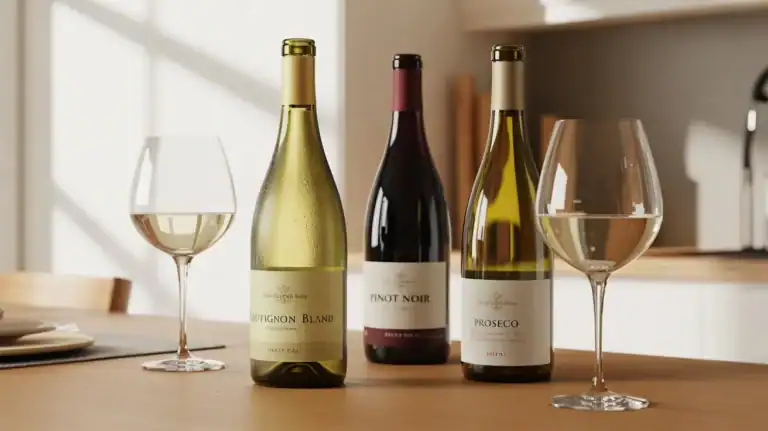
Varietal is the grape named on the label, such as Chardonnay or Pinot Noir. Vintage is the harvest year. Appellation is the named geographic origin of the wine. AVA, or American Viticultural Area, is a U.S.-specific appellation term. ABV means alcohol by volume and can hint at style, though it is not a quality score.
These terms matter because they help you make quicker shelf decisions. Two bottles can look similar at first glance, but the grape, origin, and alcohol level often point you toward the lighter, richer, fresher, or fuller style you actually want.
For beginners in the U.S., label language is most useful when it answers four questions: what grape is this, when was it harvested, where is it from, and how strong is it. That is enough to make labels feel less mysterious and far more useful.
If you want a deeper breakdown, read How to Read a Wine Label.
Wine tasting words you’ll actually hear in shops and restaurants
You do not need fancy tasting language to talk about wine well. Most real-world wine conversations revolve around a small set of style words such as fruit-forward, earthy, crisp, rich, light-bodied, full-bodied, balanced, and complex.
Fruit-forward means the wine’s fruit flavors stand out clearly. Earthy points more toward savory, herbal, or mineral notes. Crisp usually suggests lively acidity and freshness, while rich suggests more weight or softness. Balanced means the wine’s parts work together instead of one element sticking out in a bad way.
Complex does not mean better for every occasion. A simple, fresh, fruit-forward bottle can be exactly what you want with pizza or a casual dinner. For beginners, these style words are most helpful when they make a choice easier, not when they make wine sound more intimidating.
Shop and restaurant language works best when it translates taste into easy choices. Terms like crisp, rich, earthy, fruit-forward, balanced, and full-bodied help narrow style faster than advanced jargon and give staff something practical to work with.
To build tasting confidence, continue with How to Taste Wine Like a Pro.
Wine words beginners mix up all the time
Most wine confusion comes from a few terms that sound related but are not. If you can separate fruity from sweet, dry from tannic, and body from alcohol, you will understand wine faster and make better bottle choices right away.
Fruity describes flavor, not sugar level. A wine can taste like berries, peaches, or citrus and still be completely dry. Dry means not sweet. Tannin is the drying, gripping texture you feel mostly in red wine. Body is mouthfeel, while alcohol is just one factor that can influence it.
| People say… | What it really means |
| Fruity | Fruit flavors are noticeable. |
| Sweet | The wine has noticeable sugar or sweetness. |
| Dry | Not sweet. |
| Tannic | Drying, gripping texture from tannins. |
| Full-bodied | Heavier mouthfeel. |
| High alcohol | Higher ABV, which may or may not feel heavier. |
The easiest beginner breakthrough is learning that fruity is not the same as sweet, and tannic is not the same as dry. Once those pairings stop blurring together, tasting notes and shop recommendations start making much more sense.
Readers who want softer starting options can also see Best Wine for Someone Who Doesn’t Like Wine.
How to use wine terminology in real life
The point of wine vocabulary is not to sound impressive. It is to make ordering, shopping, and describing your preferences easier. Once you know a few key terms, you can ask for a bottle more clearly and avoid the vague ‘something good’ conversation.
In a wine shop, you might say: ‘I want a dry, light-bodied white’ or ‘I like reds with low tannin.’ In a restaurant, you can ask for a crisp white, a fruit-forward red, or a full-bodied wine that still feels balanced.
A practical shortcut is to describe wine using just four pieces of information: sweet or dry, light- or full-bodied, low or high tannin, and fruit-forward or earthy. That gives staff enough direction to suggest something close to your taste.
For example, if you liked a smooth, fruit-forward Pinot Noir at dinner, asking for another dry, light- to medium-bodied red with low tannin gives a wine seller a clear direction. That kind of simple description is far more useful than trying to sound technical.
Beginner wine language works best when it points to sweetness, body, tannin, acidity, and style. Those categories are practical, memorable, and easy to reuse the next time you buy or order a bottle.
For bottle ideas, go next to What Wine Should I Start With as a Beginner?, or compare styles in Red Wine vs White Wine for Beginners.
Beginner wine glossary cheat sheet
Need the short version? This glossary recap is built for quick reference. Instead of repeating full explanations, use it as a memory aid for the terms that come up most often on labels, menus, and tasting notes.
| Term | Use this word when… | Common beginner mix-up |
| Dry | You want wine that is not sweet. | Confusing dry with bitter or harsh. |
| Body | You are describing weight or richness. | Using body as a quality score. |
| Acidity | You mean fresh, crisp, lively energy. | Treating acidity as sourness alone. |
| Tannin | You feel a drying grip, mostly in red wine. | Calling tannin ‘dryness.’ |
| Varietal | You want to name the grape on the bottle. | Mixing up grape with region. |
| Vintage | You want the harvest year. | Assuming every vintage change matters equally. |
| Appellation / AVA | You want to describe where the wine comes from. | Thinking it is just a brand name. |
| Fruit-forward | You taste obvious fruit flavors. | Mixing up the grape with the region. |
If you forget everything else, remember these five first: dry, body, acidity, tannin, and varietal. Those five give you the best shot at choosing a bottle you will actually enjoy.
You can follow this article with the Wine Grape Varieties Guide or the broader Wine and Food Pairing Guide.
FAQ
What does dry mean in wine?
Dry means the wine does not taste sweet. In beginner wine language, it is the opposite of sweet, not a synonym for bitter or rough.
Is fruity wine the same as sweet wine?
No. Fruity describes flavor, while sweet describes sugar level. A wine can taste like berries or peach and still be completely dry.
What is tannin in wine for beginners?
Tannin is the drying, gripping sensation you feel mostly in red wine. It is a texture clue, not the same thing as sweetness.
What does full-bodied mean in wine?
Full-bodied means the wine feels heavier and richer in your mouth. It describes mouthfeel, not quality.
What does AVA mean on a wine label?
AVA stands for American Viticultural Area, a U.S. term for a defined grape-growing region shown on the label.
Final Thoughts
Wine gets easier fast once you stop treating it like a secret language. Learn a few core terms, use them in real situations, and your confidence will rise with every bottle. Start with dry, body, acidity, tannin, and varietal, then build from there.
Speak wine fluently—learn essential terms now!