The Complete Beginner’s Guide to Wine (2026)

You know that moment. Someone hands you a wine list at dinner and suddenly every eye at the table is on you. You scan the page. Bordeaux. Grüner Veltliner. Châteauneuf-du-Pape. You pick something with a familiar-sounding name, tell the sommelier it’s “fine,” and spend the next hour wondering what you actually ordered.
Every wine beginner has been there. Every single one.
Here’s the thing nobody in the wine world likes to say out loud: wine is not complicated. The industry has spent decades making it feel that way because mystique sells. But if you peel back the vocabulary and the ceremony, wine is fermented grape juice. The grapes determine the flavor. The winemaker shapes it. Your palate decides whether you like it.
You don’t need a certification, a cellar, or a $200 bottle to start. Millennials have already figured this out. They’ve surpassed Baby Boomers as the largest wine-drinking demographic in America, according to the Wine Market Council’s 2025 benchmarking study. Gen Z wine drinkers jumped from 46% to 70% in just two years. Wine is having a cultural moment, and it’s more democratic than it’s ever been.
This wine guide for beginners gives you the complete map: what the main types of wine are, which six bottles to start with, how to actually taste what’s in your glass, how to pair wine with food, how to read a label, and where to buy. By the end, you’ll have everything you need to order confidently, shop without guessing, and genuinely enjoy what you’re drinking.
No jargon. No gatekeeping. Let’s go.
Key Takeaways
- Wine has five main styles: red, white, rosé, sparkling, and fortified
- Start with Kim Crawford Sauvignon Blanc ($15–$18), Meiomi Pinot Noir ($18–$22), or La Marca Prosecco ($16–$19), all under $22 at Total Wine or Costco
- Millennials are now the largest wine-drinking group in the USA (Wine Market Council, 2025)
- One rule covers 80% of food pairings: match the weight of the wine to the weight of the food
- Most wine is served at the wrong temperature; fixing this costs nothing and transforms every glass
Table of Contents
What Are the Main Types of Wine and How Are They Different Wine Guide for Beginners?
Wine falls into five main categories, and once you understand these five, every wine shop shelf, restaurant list, and grocery store section makes complete sense. The world has over 1,300 commercially grown grape varieties, according to Wine Folly. All of them fit under one of these five umbrellas. You only need to understand the umbrellas to get started.
Here’s the complete picture:
Red wine is made from dark grapes fermented with the grape skins. That skin contact gives red wine its color, its structure, and most importantly, its tannins. Tannins are what create that drying sensation in your mouth after a sip of Cabernet Sauvignon.
White wine is made without skin contact, whether from white grapes or occasionally from dark grapes with the skins removed before fermentation. Without skins, you get no color and no tannins. White wine tends to be lighter, crisper, and more acidic than red.
Rosé gets its pink color from brief skin contact with red grapes. The winemaker controls exactly how pink the wine gets by controlling how long the juice touches the skins. Rosé is versatile, food-friendly, and one of the most underrated styles for beginners.
Sparkling wine gets its bubbles either from a second fermentation in the bottle (the traditional method, used for Champagne and Cava) or from carbonation added in a tank (used for Prosecco). The method affects the texture of the bubbles and how long they last in the glass.
Fortified wine is wine with added spirit, usually brandy, which raises the alcohol content to 18–22%. Port, Sherry, Madeira, and Marsala are all fortified wines. They last much longer after opening than regular wine.
What Does “Dry” Actually Mean in Wine?
Dry means the wine has no residual sugar. The grape sugar has been fully converted to alcohol during fermentation. Sweet means residual sugar remains.
“Dry” is a chemistry description, not a flavor description. A bone-dry Cabernet Sauvignon can taste intensely fruity and rich. It’s still dry. Most table wines you’ll encounter at dinner are dry.
| Wine Style | Sweetness Level | Common Examples |
|---|---|---|
| Brut Nature / Zero Dosage | Driest | Champagne, Cava |
| Brut | Very dry | Champagne, Cava, Prosecco |
| Sauvignon Blanc | Dry | Kim Crawford, Oyster Bay |
| Pinot Grigio | Dry | Santa Margherita, Cavit |
| Pinot Noir | Dry | Meiomi, La Crema |
| Cabernet Sauvignon | Dry | Josh, Caymus |
| Off-Dry Riesling | Slightly sweet | Dr. Loosen, Chateau Ste. Michelle |
| Moscato d’Asti | Sweet | Risata, Saracco |
What Is “Body” and Why Does It Matter?
Body describes how wine feels in your mouth: its weight and texture. Light-bodied wine feels like water: thin, easy, refreshing. Full-bodied wine feels richer and heavier.
| Body Level | Examples |
|---|---|
| Light | Pinot Grigio, Riesling, Pinot Noir, Beaujolais |
| Medium | Sauvignon Blanc, Rosé, Merlot, Grenache |
| Full | Oaked Chardonnay, Cabernet Sauvignon, Malbec, Syrah |
Citation Capsule: Wine falls into five primary categories (red, white, rosé, sparkling, and fortified) containing all 1,300+ commercially grown grape varieties. The most critical beginner concept is the dry-to-sweet spectrum: dry wines have had natural sugar fully converted to alcohol during fermentation, while sweet wines retain residual sugar. Source: Wine Folly
Which Wines Should a Complete Beginner Try First (Wine Guide for Beginners)?
Start with three varieties: a crisp white, a soft red, and something sparkling. You’ll cover the widest range of beginner-friendly tastes in just three bottles. Cabernet Sauvignon, Chardonnay, and Pinot Noir collectively represent 30% of USA wine sales by variety (SVB State of the US Wine Industry, 2025).
All six bottles below are available for under $22 at Total Wine, Costco, or most large USA grocery stores.
Show Image
The White Starters
Kim Crawford Sauvignon Blanc, Marlborough, New Zealand ($15–$18) This is the most beginner-friendly white wine in America. It’s clean, bright, and unmistakably citrus-driven. Available at Total Wine, Costco, and virtually every grocery store nationwide.
Kendall-Jackson Vintner’s Reserve Chardonnay, California ($14–$18) A lightly oaked California Chardonnay that’s creamy without being heavy. Notes of pear, vanilla, and a gentle toast from the oak aging. Available at Costco and Total Wine.
The Red Starters
Meiomi Pinot Noir, California ($18–$22) The best gateway red for beginners who are nervous about tannins. Fruit-forward: strawberry, black cherry, a little mocha, with a soft, approachable structure. Find it at Costco and Total Wine.
Josh Merlot, California ($12–$15) Velvety, plum-forward, and genuinely friendly. One of the most consistent value reds in the USA at its price point. Total Wine carries it everywhere.
The Sparkling Starter
La Marca Prosecco, Veneto, Italy ($16–$19) Light, slightly sweet, with fine bubbles and notes of honey and cream. The USA’s best-selling Prosecco. Total Wine and Costco both stock it reliably.
The Rosé Starter
Whispering Angel Provence Rosé, France ($25–$30) The USA’s benchmark for serious, dry rosé. Pale salmon-pink, delicate, with strawberry and stone fruit. Available at Total Wine and Wine.com.
Citation Capsule: The three best starting points for USA wine beginners are a crisp Sauvignon Blanc (Kim Crawford, $15–$18), a soft Pinot Noir (Meiomi, $18–$22), and a light Prosecco (La Marca, $16–$19), all available at Total Wine and Costco. Source: SVB State of the US Wine Industry, 2025
How Do You Actually Taste Wine Like You Know What You’re Doing?
Around 80% of what we perceive as “taste” is actually aroma, according to Wine Folly. This means the most important step in wine tasting happens before you take a single sip.
Wine tasting has five steps:
Show Image
| Step | What to Do | What You’re Learning |
|---|---|---|
| See | Hold glass against white background, tilt slightly | Color depth = body |
| Swirl | Gentle circular motion, 3–5 seconds | Releases aromatic compounds |
| Smell | Nose directly into glass, breathe naturally | Fruit, oak, earth, floral notes |
| Sip | Small amount, let wine coat your whole mouth | Sweetness, acidity, tannins, body |
| Savor | Note how long flavor persists after swallowing | Short finish = simple; long finish = quality |
What Are Tannins and Why Do They Make Your Mouth Feel Dry?
Tannins are naturally occurring compounds found in grape skins, seeds, and stems. They create the drying, slightly astringent sensation you feel along your gums after drinking a Cabernet Sauvignon. Low-tannin reds (Pinot Noir, Beaujolais, Merlot) are more forgiving for beginners.
What Does Acidity Feel Like in Wine?
Acidity creates the tartness, crispness, and brightness you feel on the sides of your tongue. High-acid wines make your mouth water. Sauvignon Blanc, Champagne, Riesling, and Pinot Grigio are all high-acid wines.
Citation Capsule: The five-step tasting method (See, Swirl, Smell, Sip, Savor) gives beginners a reliable framework. The critical insight: approximately 80% of flavor perception comes from aroma. Source: Wine Folly, Decanter
What Do You Say About Wine When You Have No Idea What You’re Tasting?
You say exactly what you taste. The five flavor categories in wine:
- Fruit: Berry, citrus, stone fruit, tropical
- Earth: Mushroom, leather, mineral, wet stone
- Floral: Rose, violet, jasmine, lavender
- Spice and oak: Vanilla, toast, cedar, black pepper
- Structure: Acidity, tannins, alcohol, body
The Vocabulary Cheat Sheet
| Term | What It Means |
|---|---|
| Dry | No residual sugar |
| Crisp | High acidity |
| Tannic | Mouth-drying sensation |
| Oaky | Vanilla, toast, cedar notes |
| Finish | Lingering flavor after swallow |
| Balanced | No single element dominates |
Old World vs New World Wine
Old World wines (France, Italy, Spain) tend to be more earthy, restrained, and food-driven. New World wines (USA, NZ, Australia) tend to be more fruit-forward and approachable. For beginners in the USA, New World wines tend to be more immediately enjoyable.
Citation Capsule: Wine flavor vocabulary organizes into five categories: fruit, earth, floral, spice and oak, and structure. The Old World vs New World distinction: Old World wines lean earthier; New World wines lean more fruit-forward. Beginners in America typically find New World styles more immediately approachable. Source: Wine Folly, author expertise
How Do You Pair Wine with Food Without Overthinking It?
One rule covers 80% of wine and food pairing decisions: match the weight of the wine to the weight of the food. Per Wine Spectator, this single principle is the foundational pairing guideline taught at every level of wine education.
| Wine Style | Best Food Matches | Avoid |
|---|---|---|
| Light White (Sauvignon Blanc) | Seafood, light pasta, salads | Heavy steak |
| Full White (Chardonnay) | Lobster, roast chicken, mushroom risotto | Spicy food |
| Rosé | Salmon, charcuterie, grilled vegetables | Very heavy red meat |
| Light Red (Pinot Noir) | Duck, salmon, mushroom dishes | Spicy bold food |
| Full Red (Cabernet Sauvignon) | Steak, lamb, aged cheese | Delicate fish |
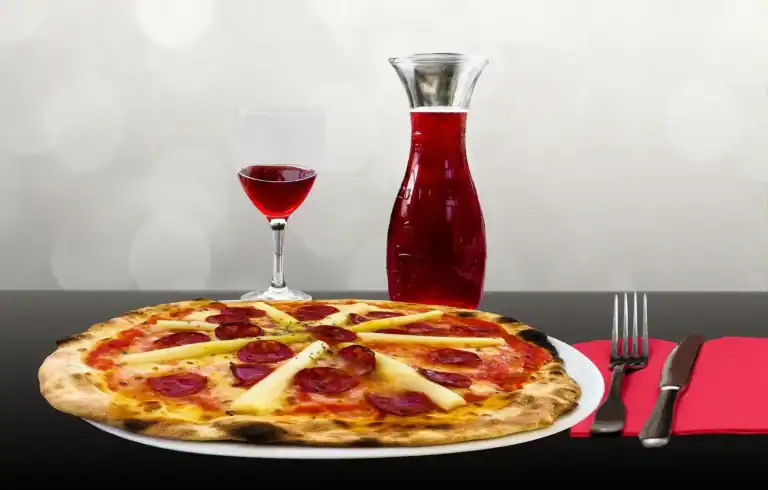
| Sparkling | Fried food, oysters, pizza, salty snacks | Heavily tannic food |
Citation Capsule: The foundational pairing principle: match wine weight to food weight. Light Sauvignon Blanc complements delicate fish; full-bodied Cabernet Sauvignon pairs naturally with steak. The contrast principle (acidity cuts fat) explains why Champagne works with fried food. Source: Wine Spectator, Decanter
How Do You Read a Wine Label Without a Translator?
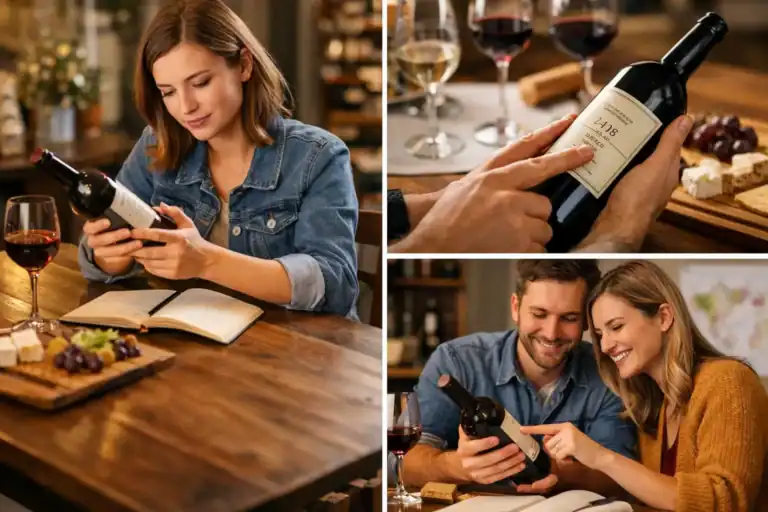
A wine label contains five pieces of information:
- Producer or winery name: Josh Cellars, Kim Crawford, Caymus, La Marca
- Grape variety or wine name: USA labels list the grape; European labels list the region
- Region or appellation: Where the grapes grew
- Vintage year: When the grapes were harvested
- Alcohol by volume (ABV): Usually 11–15% for table wines
Show Image
USA Label vs European Label
| Element | USA / New World Label | French / European Label |
|---|---|---|
| Identifies wine by | Grape variety | Region |
| Example | “Cabernet Sauvignon” | “Bordeaux” |
| Example | “Sauvignon Blanc” | “Sancerre” |
| Example | “Pinot Noir” | “Burgundy” |
Citation Capsule: A wine label communicates five elements: producer, grape variety, region, vintage year, and ABV. The key beginner insight: USA labels list the grape (“Cabernet Sauvignon”), while European labels list the region (“Bordeaux” = Cabernet blend). Source: Mintel US Wine Market Report 2025, Wine Folly
Does Serving Temperature Actually Matter?
Most wine in the USA is served at the wrong temperature. Red wine is almost always served too warm. Fixing this immediately improves every glass you pour, according to Wine Folly.
| Wine Style | Ideal Serving Temp | Practical Shortcut |
|---|---|---|
| Sparkling | 45°F–48°F | Straight from fridge |
| Light white | 50°F–55°F | 10 minutes out of fridge |
| Full white | 55°F–60°F | 20 minutes out of fridge |
| Rosé | 50°F–55°F | 10 minutes out of fridge |
| Light red | 58°F–62°F | 15 minutes out of fridge |
| Full red | 63°F–68°F | Room temp if below 70°F |
And if you’ve ever wondered whether you should refrigerate wine after opening, the answer is always yes. We tested exactly how long different wine types stay drinkable once opened and the results might surprise you.
Citation Capsule: Wine serving temperature significantly affects flavor. Full-bodied reds like Cabernet Sauvignon should be served at 63–68°F. At typical USA room temperatures (72–75°F), alcohol dominates and fruit recedes. Source: Wine Folly
Where Should You Actually Buy Wine as a Beginner?
Total Wine & More is the best overall starting point. Staff are trained to help shoppers find bottles by price, style, and occasion.
Costco is unbeatable for value under $30. The Kirkland Signature private-label wines are consistently excellent for their price.
Wine.com is the research-first option — comprehensive search, detailed tasting notes, verified user reviews, and delivery to most US states.
Trader Joe’s and large grocery chains serve a real purpose for under-$12 everyday drinking.
Citation Capsule: For USA wine beginners, three retailers cover every purchase scenario: Total Wine for the widest selection, Costco for exceptional value under $30, and Wine.com for research-driven buying. Source: Author expertise
Which Wine Regions Should Every Beginner Know?
Five USA Wine Regions
Napa Valley, California — best American Cabernet Sauvignon and Chardonnay Willamette Valley, Oregon — best Pinot Noir in the United States Sonoma County, California — excellent Chardonnay, Pinot Noir, and Zinfandel Finger Lakes, New York — America’s most underrated wine region for Riesling Washington State — excellent Cabernet Sauvignon and Merlot
Five International Regions
Bordeaux, France — origin of Cabernet Sauvignon and Merlot blends Burgundy, France — where Pinot Noir and Chardonnay were perfected Tuscany, Italy — Sangiovese-based reds, outstanding with pasta Rioja, Spain — Tempranillo-based reds, best value in wine Marlborough, New Zealand — world reference for Sauvignon Blanc
Citation Capsule: Ten wine regions form the practical foundation for beginner wine knowledge: Napa Valley, Willamette Valley, Sonoma, Finger Lakes, Washington State, Bordeaux, Burgundy, Tuscany, Rioja, and Marlborough. Source: Author expertise, Wine Spectator
Frequently Asked Questions About Wine for Beginners
What Wine Should an Absolute Beginner Start With?
Start with three: Kim Crawford Sauvignon Blanc ($15–$18) for white, Meiomi Pinot Noir ($18–$22) for red, and La Marca Prosecco ($16–$19) for sparkling. All are available at Total Wine and Costco nationwide. There’s genuinely no wrong starting choice.
Is Wine Hard to Learn About?
No, and the learning happens passively, through drinking with attention. You don’t need to study anything to enjoy wine. The more you drink and notice, the faster your palate develops. One intentional bottle per week with a one-sentence note in your phone builds more practical wine knowledge in three months than most courses deliver.
What’s the Difference Between Red Wine and White Wine?
Red wine is made from dark grapes fermented with the grape skins, which creates color and tannins. White wine is made without skin contact, producing a lighter, more acidic result. Red wine typically pairs better with heavier food. White wine pairs with lighter, more delicate dishes.
What Does Dry Wine Mean for Beginners?
Dry means the wine has no residual sugar. The natural grape sugar was fully converted to alcohol during fermentation. It’s a chemistry description, not a flavor description. Most table wines at dinner are dry. Dessert wines, Moscato, and off-dry Rieslings are sweet.
How Much Should a Beginner Spend on Wine?
$12–$20 is the sweet spot for building your palate without wasting money. Between $12 and $20, producers like Josh, Meiomi, Kim Crawford, and Kendall-Jackson deliver reliably good wine. There’s no compelling reason to spend over $25 until you know your preferences specifically enough to have a reason for the premium.
The Bottom Line
Here’s the complete beginner’s wine guide map: Wine has five styles, and they all taste better at the right temperature. Start with a crisp white, a soft red, or something sparkling. Use the Five S’s to actually taste what’s in your glass. Match the wine’s weight to the food’s weight. Read the label for five elements. Buy at Total Wine, Costco, or Wine.com.
That’s the whole system.
The best thing I ever did for my wine knowledge was keeping a one-sentence note in my phone after every bottle. Just the wine name, one flavor I noticed, and whether I’d buy it again. After three months, patterns emerged. You’ll build yours the same way.
Wine doesn’t require expertise. It just requires attention.
Sources: Wine Folly | Wine Spectator | Decanter | Wine Market Council 2025 | SVB State of the US Wine Industry 2025 | Mintel US Wine Market Report 2025