How to Read a Wine Label for Beginners (2026)

If you’ve ever stood in a wine aisle and wondered what half the label means, you’re not alone. For beginners, reading a bottle is less about memorizing jargon and more about spotting a few useful clues quickly. This guide shows you how to read a wine label for beginners by focusing on the producer, region, grape, vintage, and alcohol level first. Once you know how those pieces work together, choosing wine feels a lot less random. If you’re completely new to wine, start with our beginner wine basics in the Complete Beginner’s Guide to Wine.
| Key Takeaways • Start with five basics: producer, region, grape, vintage, and ABV. • If the grape is not listed, the region is often your best clue. • Terms like Reserve can help sometimes, but they are not your most reliable buying shortcut. • Use the label to predict style and fit, not to chase prestige. |
Table of Contents
How to Read a Wine Label for Beginners in 30 Seconds
The easiest way to read a wine label is to scan it in a simple order: producer, region, grape or blend, vintage, and alcohol by volume. That sequence gives beginners the fastest route to understanding what the wine is likely to taste like and whether it fits the occasion.
Think of a wine label as a clue card, not a test. You do not need to decode every term on the bottle. You just need enough information to answer three basic questions: who made it, where it came from, and what kind of wine it is likely to be.
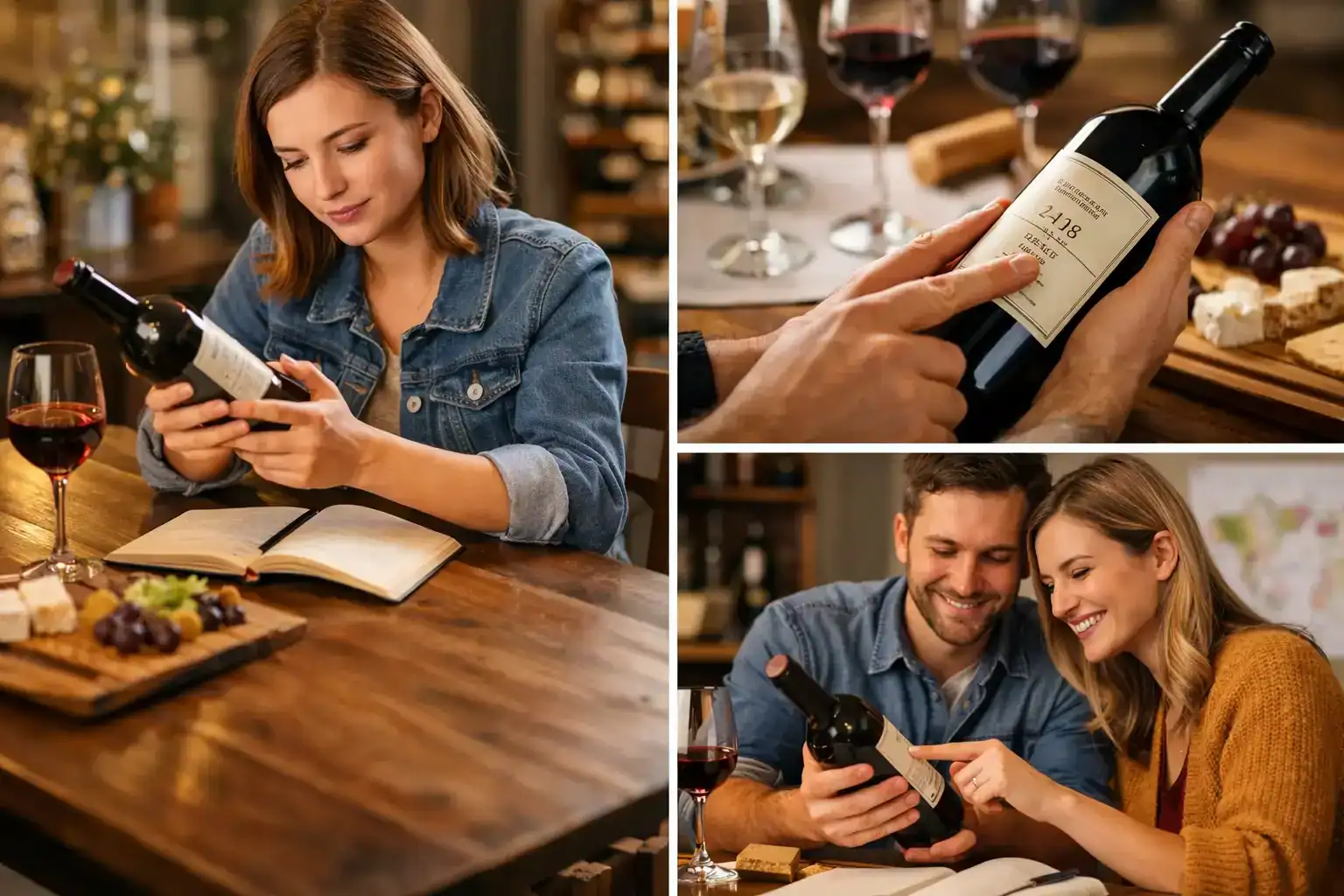
A quick scan works like this. First, find the producer or brand name. Second, look for the region or appellation. Third, check whether the grape variety or blend is listed. Fourth, glance at the vintage. Fifth, check the ABV, which can give you a rough clue about body and ripeness. Then, if you want a little extra context, read the back label.
This order matters because it keeps you focused on the most useful clues first. A bottle may have elegant design, long back-label storytelling, or prestige-sounding words, but none of those help as much as the basic label facts.
For a real store example, imagine you pick up a bottle that says Oregon Pinot Noir, 13.0% ABV. Even if you know very little about wine, you can already tell the grape, the region, and that the wine may lean lighter than a riper red with a much higher alcohol level.
What Does Each Part of a Wine Label Mean?
Each main part of a wine label answers one practical question: who made the wine, where the grapes came from, what grapes were used, when they were harvested, and how strong the wine is. Once you understand those pieces, the label becomes much easier to use in the store.
The producer or brand is the winery, estate, or company behind the bottle. This is helpful because wine drinkers often buy by familiarity. If you enjoy one bottle from a producer, there is a decent chance you will enjoy another bottle made in a similar style.
The region or appellation tells you where the wine comes from. For beginners, this matters because place often hints at style. A region can also matter more than the grape on bottles that do not list the variety clearly.
The grape variety or blend is often the easiest entry point. If a bottle says Chardonnay, Merlot, or Sauvignon Blanc, you already have a flavor starting point. On some labels, especially blends or certain European wines, you may not get that clue as directly.
The vintage is the year the grapes were harvested. It can matter, but beginners usually do not need to make it their first filter on everyday bottles. The alcohol by volume, or ABV, is another helpful clue. It does not tell you everything, but it can suggest whether a wine may feel lighter, fuller, leaner, or riper.
| Label clue | What it means | What it suggests | Beginner action |
| Producer | Who made the wine | House style and reliability | Remember names you like |
| Region / appellation | Where the grapes came from | Climate, style, and origin context | Use it when the grape is missing |
| Grape / blend | What grapes are inside | Flavor family | Start here on many New World bottles |
| Vintage | Harvest year | Possible variation from one year to another | Treat it as a secondary clue |
| ABV | Alcohol percentage | Possible body and ripeness | Use as a rough style hint |
Why Some Wine Labels Are Easy to Read and Others Feel Confusing
Many beginner-friendly labels lead with the grape, while many classic European labels lead with the place. That is why some bottles feel easy to decode in seconds and others feel like they assume you already know more than you do.
A New World bottle often says something direct like Cabernet Sauvignon, Pinot Grigio, or Red Blend on the front. That makes it easier for beginners because the grape name gives an immediate style clue.
An Old World bottle may lead with a place name instead. A French bottle, for example, might highlight a region or appellation rather than the grape. In that case, the place is not decorative. It is the main clue the producer expects you to use.
That does not mean Old World labels are worse. They simply follow a different logic. If the grape is missing, trust the place name more than the artwork or the prestige cues.
A useful beginner mindset is this: if the label is grape-led, start with the grape. If the label is place-led, start with the region. That one rule clears up a lot of confusion very quickly.
| Suggested inline image: Side-by-side comparison of a grape-led New World bottle and a place-led Old World bottle. |
Which Wine Label Terms Matter Most for Beginners?
Beginners do not need to learn every wine term at once. The best approach is to focus on terms that improve origin, style, or sweetness clues first, then treat prestige language more cautiously until you have more context.
Appellation is worth learning because it points to origin. In the United States, you may see an AVA. In Europe, you may see other regional designations. For a beginner, the takeaway is simple: origin terms often help you understand what style of wine is in the bottle.
Dry is another useful term, but it needs simple interpretation. Dry usually means the wine has little or no sugar left after fermentation. That still does not mean every dry wine tastes the same, but it helps narrow expectations.
Estate Bottled can be a stronger production-origin clue than generic marketing language. Reserve, on the other hand, should be handled with more caution. Sometimes it means something meaningful in a region or producer’s system. Sometimes it is mostly positioning language.
For U.S. and Canadian beginners, country-of-origin and mandatory label details are often more helpful than prestige wording. If you have to choose between a reliable factual clue and a dramatic term, trust the factual clue first.
How to Use a Wine Label to Choose a Wine You’ll Actually Enjoy
A wine label cannot promise you will love a bottle, but it can help you predict style well enough to make better beginner decisions. The goal is not perfect tasting-note accuracy. The goal is to narrow the field with smarter clues.
If you’re not sure where to start, see our guide on Best Wines for Beginners to find easy bottles to try first.
Start with the grape if it is listed. That gives you the easiest flavor family clue. Then look at the region to get a better sense of style. A familiar grape from one place may taste different in another, but the combination of grape and place is already far more useful than choosing by label art.
Use ABV as a rough supporting signal. A lower-ABV bottle may lean lighter or crisper, while a higher-ABV bottle may feel fuller or riper. That is not a strict rule, but it is often helpful when you are deciding between two similar-looking bottles.
Here is a practical comparison. If you want a smooth pizza-night red, a bottle labeled California Merlot at 13.5% ABV gives a beginner several easy clues right away. A bottle labeled Côtes du Rhône at 15% ABV may still be a great choice, but it asks you to rely more on regional knowledge and may lean riper or fuller in feel.
When you are still learning, use the label to predict fit rather than quality rank. Ask: is this likely to be lighter or fuller, fruitier or drier, familiar or more region-driven? That mindset leads to better first purchases.
What Beginners Should Ignore or Not Over-Trust on a Wine Label
The most reliable beginner habit is to trust the factual clues first and the dramatic wording second. A wine label can guide your decision, but it should not be treated as a guarantee of quality, prestige, or personal taste match.
Fancy typography, crests, and romantic storytelling can make a bottle look impressive, but they do not tell you much about style. The same goes for prestige-sounding language that is not backed by useful origin or production information.
Reserve is the classic example. It may matter in some contexts, but it is not a magic shortcut. Price can mislead beginners too. A more expensive bottle is not always a better starting point if the style does not match what you like.
If you remember one final checklist, make it this: look for producer, region, grape, vintage, and ABV first. Then decide whether the label gives you a clear reason to expect the wine to fit your taste and occasion.
FAQ
What should I look at first on a wine label?
Start with the producer, region, grape, vintage, and ABV. Those five clues usually tell you more than the marketing language on the bottle.
Can I tell if a wine is sweet or dry from the label?
Sometimes. If the label says dry, off-dry, or sweet, that helps. If it does not, use the grape, style, and region as supporting clues.
Why do some wine labels not list the grape?
Many wines, especially from classic European regions, are labeled by place rather than grape. In those cases, the region becomes your best clue.
Does vintage matter when I am new to wine?
Yes, but usually not as much as producer, region, grape, and overall style. On everyday bottles, vintage is often a secondary filter.
Conclusion
Reading wine labels gets easier fast once you stop trying to decode everything at once. Focus on the few clues that consistently help: producer, region, grape, vintage, and ABV. Use those details to predict style, not to chase prestige. If you want the next step, move from label-reading into broader wine basics, then into bottle recommendations and pairing ideas that fit how you actually drink. Once you know how to read wine labels, the next step is learning which wines pair well with food. See our guide on What Wine Pairs Best with Pizza for a practical example.