How to Verify an Unknown Brand Online Before You Buy 2026

If you have never heard of a brand before, the safest move is not to trust the first thing you see. How to Verify an Unknown Brand Online Before You Buy comes down to one rule: check the website, the business identity, the outside reputation, and the payment risk before you spend money. A polished homepage can still hide a weak or suspicious seller.
That matters when people discover brands through social ads, influencer posts, or search results and have to decide fast. A quick check can save you from a bad order, a refund battle, or a stolen-card headache.
| Key Takeaways |
| • Never trust one signal alone. |
| • HTTPS helps, but it does not prove a seller is honest. |
| • Search the brand name with “scam” or “complaint” before you buy. |
| • If the brand fails two or more independent checks, pause the purchase. |
| • Safer payment methods matter when the brand is unfamiliar. |
Table of Contents
The quick answer: verify an unknown brand in 7 checks
To verify an unknown brand online before you buy, use a short sequence instead of guessing. Check the URL, run a site-safety check, look up the domain, verify the business identity, read outside reviews, inspect the policies, and judge the payment risk. If several of those checks look weak, stop before you pay.
Start with the fastest checks first:
- Check whether the domain matches the brand name.
- Look for obvious website red flags.
- Run the site through a safety check.
- Look up the domain registration details.
- Verify the company behind the store.
- Read reviews and complaints from outside sources.
- Check refund, return, and payment-risk signals.
This order matters. Many people waste time reading product descriptions before they confirm whether the business behind the site is even traceable. A quick outside search often surfaces complaints, refund problems, or no-delivery patterns faster than any on-site promise.
For example, imagine you click an Instagram ad for a store offering branded sneakers at 80% off. The homepage looks clean, but the domain does not match the brand name, the return policy is vague, and outside search results show no real company footprint. That is enough to pause before you reach checkout.
Check the website first for obvious warning signs (How to Verify an Unknown Brand Online Before You Buy)
The website itself can reveal risk in less than a minute. Start by asking whether the domain looks real, whether the pages feel consistent, and whether the business gives you basic information without hiding behind hype or urgency.
Look closely at the address bar first. Does the domain match the brand name, or is it a strange variation with extra letters, hyphens, or an unrelated ending? Scammers often rely on people skimming rather than reading carefully.
Then scan the site quality. A suspicious store often shows a cluster of weak signals:
- copied product images
- awkward grammar throughout the site
- broken pages or dead links
- fake countdown timers
- No proper contact details
- an “About” page that says almost nothing
None of these proves fraud by itself. A new or poorly built store can still be legitimate. But a real business usually gets the basics right because customers, banks, and payment providers expect it.
HTTPS is useful, but it is not a trust badge. It means the connection between you and the site is private. It does not confirm that the seller is reputable.
That distinction matters. A shady seller can still buy a domain, install HTTPS, and publish a sleek storefront. Encryption protects the connection. It does not confirm who is behind the business.
Use free tools to verify the brand’s digital footprint
Free lookup tools help you move from “this feels off” to “here is what I can actually confirm.” You do not need paid fraud software for a first check. A search engine, Google Safe Browsing, and ICANN Lookup can tell you a lot in a few minutes.
Start by searching the brand name with smart modifiers:
- brand name + review
- brand name + complaint
- brand name + scam
- domain name + review
- brand name + refund
That search often surfaces patterns the brand’s own website will never show you. Next, check the site with Google Safe Browsing to see whether it is currently flagged as dangerous.
Then use ICANN Lookup to review the current domain registration record. A brand-new domain is not automatically fake, but it deserves extra caution if the site claims years of history or worldwide trust.
| Check | What it can tell you | What it cannot prove | Green flags | Red flags |
| Search results | Complaints, review patterns, outside mentions | Full legitimacy | Mixed real mentions and support info | Multiple scam complaints or no footprint |
| Google Safe Browsing | Whether Google currently flags the site as dangerous | Business quality or honesty | No danger flag | Dangerous warning |
| ICANN Lookup | Domain age and registration clues | Whether the business is reputable | Domain history fits the brand story | Very new domain with big trust claims |
Verify the company behind the brand, not just the website
A legitimate-looking storefront is not enough. You also want proof that a real business sits behind the site, with traceable details that stay consistent across pages and outside sources.
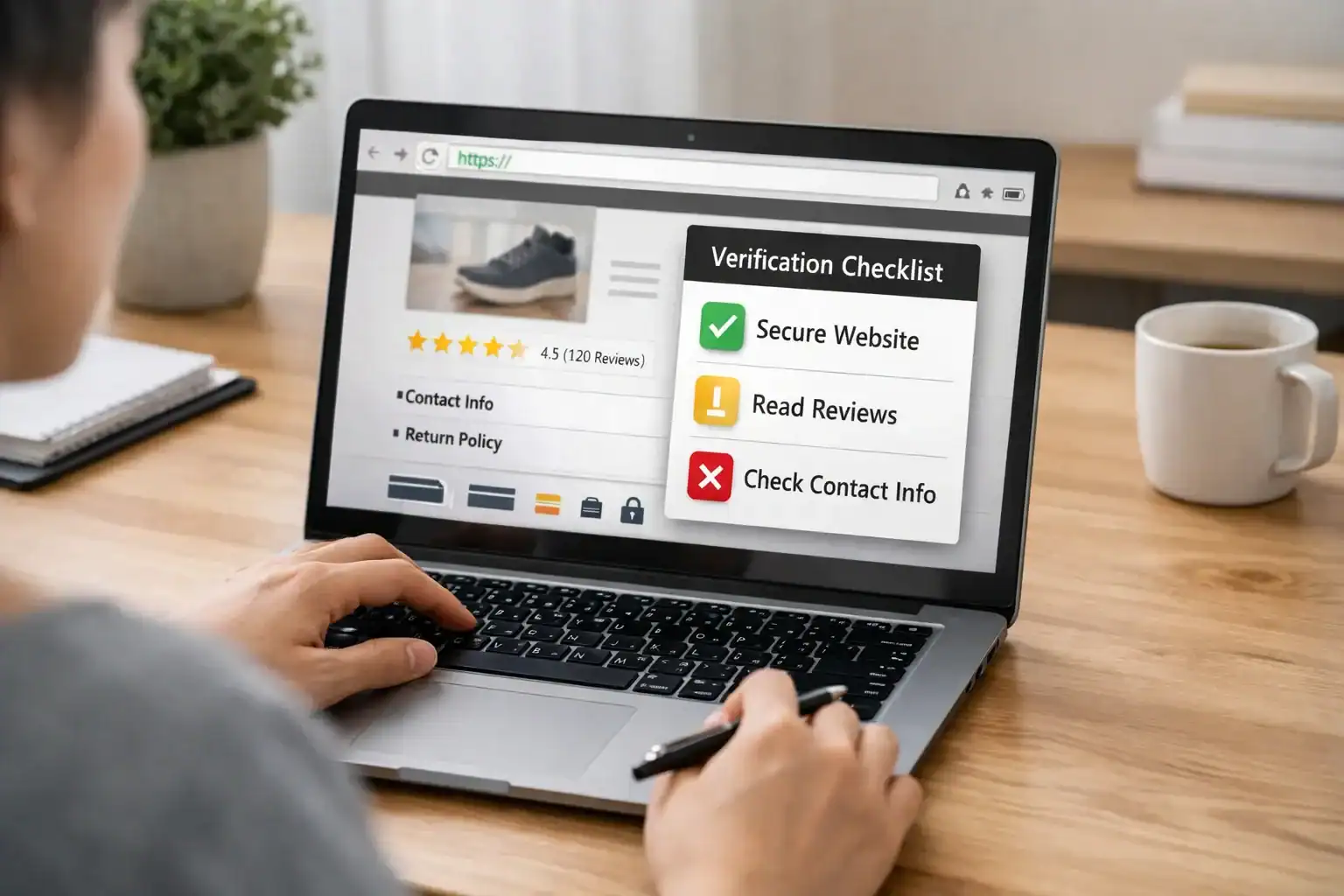
Start with the obvious: can you find a business name, contact email, phone number, physical address, returns policy, privacy policy, and terms page?
Then compare those details across the site. Does the About page name the same company as the Returns page? Does the shipping policy mention a different business? Does the address appear real when checked on a map?
This is where many weak stores fall apart. You might find:
- no legal name anywhere
- a generic Gmail address instead of business support
- a fake-looking address
- copied policy pages that mention another company
- No complaint process at all
That does not always mean a scam. Sometimes it means a rushed dropshipping store with poor operations. But from a buyer’s point of view, that is still a risk.
Think of this as an identity check, not a design check. The site can look polished and still fail the identity test. If you cannot tell who runs the brand, who takes responsibility, or how to contact them when something goes wrong, the purchase is riskier than it looks.
Check reputation, reviews, and buyer-risk signals before you pay
Reviews help, but only when you read them in context. The better question is not “Does this brand have positive reviews?” It is “Do the reviews, refund terms, and payment options line up with a business I would trust with my money?”
Look for patterns, not perfection. A real brand may have some negative feedback. That is normal. But warning signs pile up fast when you see:
- only glowing five-star reviews with vague wording
- Many reviews are posted close together,
- repeated complaints about no delivery or no refunds
- social comments disabled or heavily filtered
- no independent mentions outside the brand’s own channels
Now check the buyer-risk signals:
- Is the return policy clear or slippery?
- Are refund timelines spelled out?
- Are shipping times realistic?
- Does checkout offer buyer-protected payment methods?
- Is the site pushing wire transfers, crypto, or other hard-to-reverse payments?
A brand with limited reviews but good payment protections may be worth a careful test purchase. A brand with vague policies and irreversible payment demands is a much harder no.
Use a simple buy, pause, or avoid decision framework
You do not need perfect certainty to make a safer choice. What you need is a repeatable way to sort the brand into three buckets: buy, pause, or avoid.
Buy
You found a consistent business identity, clear policy pages, outside reviews that look real, and payment methods with buyer protection. Nothing major feels hidden.
Pause
The brand may be real, but several things are still unclear. Maybe the domain is new, reviews are thin, or the return policy is weak. In that case, wait, research more, or make a very small test order instead of a big one.
Avoid
The site fails multiple checks. The domain feels off, company details are missing, complaints show up fast, and payment methods offer weak protection. At that point, the smartest move is to leave.
A useful rule for beginners: if two or more independent checks fail, stop and reassess.
| Signal Area | Green | Yellow | Red |
| Website | Clean, consistent, clear details | Minor issues, some missing detail | Mismatch, copied content, missing basics |
| Business identity | Traceable company and address | Limited proof, mixed details | No clear owner, fake or inconsistent details |
| Reviews and complaints | Mixed but believable footprint | Thin footprint | Repeated scam or no-delivery complaints |
| Payment and refunds | Buyer protection and clear refund rules | Some ambiguity | Irreversible payment pressure, vague refunds |
If you already paid and the brand now looks suspicious, act fast. Save screenshots, contact the seller in writing, reach out to your card issuer or payment provider, and report the issue through the FTC’s fraud reporting system when relevant.
FAQ
How do I know if an unknown brand is legit?
Check more than one signal. Look at the website quality, verify the business identity, search for outside reviews and complaints, and review the payment and refund terms before buying.
Can a website have HTTPS and still be a scam?
Yes. HTTPS means the connection is private, not that the business is honest.
How do I check if a company is legitimate online?
Search the company name with “complaint” or “scam,” look for policy and contact details, check the address on a map, and verify registrations or licences where relevant.
Are review sites enough to verify a brand?
No. Reviews help, but they should be checked across multiple sources and compared with the site’s business details, policies, and payment protections.
What should I do if I have already bought from a suspicious website?
Save screenshots, contact your payment provider quickly, change passwords if you created an account, and file a fraud report where appropriate.
Final thoughts
When you find a brand through an ad, a search result, or a random recommendation, slow down for five minutes before you pay. Check the site, check the company, check the outside reputation, and check the payment risk. That one habit will catch a lot of weak or suspicious brands before they catch you.
Use this checklist every time you see an unfamiliar store online. For a related example of how suspicious online terms and trust signals can show up on the web, read What Is Qullnowisfap? Meaning, Red Flags, Is It Real?.